
Our net zero transition plan
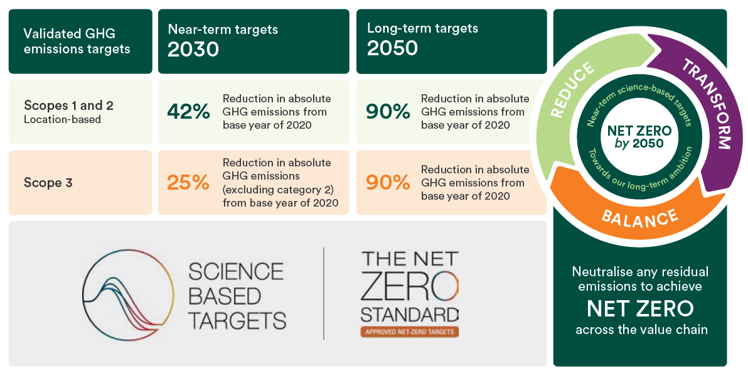
 Our transition plan sets out how we will support and prepare for a rapid global shift to a low emission economy, targeting net zero across all three emissions scopes by 2050 in line with the SBTi Net-Zero Standard.
Our strategy and resultant transition plan contains four themes that are all vital to transition to a low carbon future.
Playing our part to mitigate climate change through setting and meeting ambitious science-based targets
Our transition plan is ambitious and adaptive and takes into consideration the risk, impacts and dependencies on our resources, our value chain and our stakeholders. Our emissions reduction targets are based on climate science, cover all three emission scopes and are aligned with the 1.5°C ambition of the Paris Agreement. The Science Based Targets initiative (SBTi) is a collaboration that defines and promotes global best practice in science-based target setting.
We are proud to have been the first UK water company to have near-term, long-term and net-zero targets approved by the SBTi as compliant with the Corporate Net-Zero Standard. Having achieved two of the four near-term targets and, in the context of our accepted regulatory business plan, we have reviewed all our targets and successfully had them revalidated in March 2026.
As a regulated service provider and infrastructure operator, elements of our transition plan are outside of our control. Our ability and approach to net zero is ultimately determined by national policy frameworks and legislative duties, such as the new Environment Act and economic regulation. Between them, these drive both the emissions growth pressures we need to counteract and the level of investment we can allocate to emissions reductions. Our transition plan, therefore, also includes engagement activities with regulators and the Government to inform effective policy that fully values GHG emissions to support sustainable development in the round.
Reducing our environmental impacts through the delivery of transformational strategies and culture change
Our action plan to achieve net zero by 2050 (in line with climate science and the UK Government targets) has three themes aligned to our company purpose and values:
We will:
 REDUCE - this theme focuses on improving the way we use and generate electricity and accelerating the shift to low-carbon vehicles and fuels. Click here to read more about our approach to energy management.
 TRANSFORM - we will be redesigning systems for a low-carbon future, and investing in transformation of our assets and processes to address hard-to-abate emissions.
 BALANCE - this theme aims to managing what is left with integrity, and partnering with others on what is beyond our control.
Innovating across processes, technology and culture
Our strategy pillar of ‘beyond here and now’ reflects our intention to influence beyond our current emissions inventory and also beyond existing capabilities. We will go beyond emissions reductions and enable, encourage and reward interventions that protect and enhance the natural environment, while promoting the value of wider ecosystem services. This will include challenging standards, promoting nature-based solutions, and the increased application of circular economy principles with industry peers, our supply chain, and other partners.
We work closely with others across the water sector through the Water UK carbon network and its subgroups, UKWIR’s carbon big question, and on innovation projects. Working with other water companies and academic partners, we are leading two Ofwat Innovation Fund projects.
‘Metagenomics: Making Microbes Matter’ will link microbial population data with wastewater treatment performance to better understand nitrous oxide emissions pathways and identify opportunities for emissions reduction.
‘Next-Gen Digestion’ will increase biogas generation while reducing volumes of residual biosolids (treated sludge).
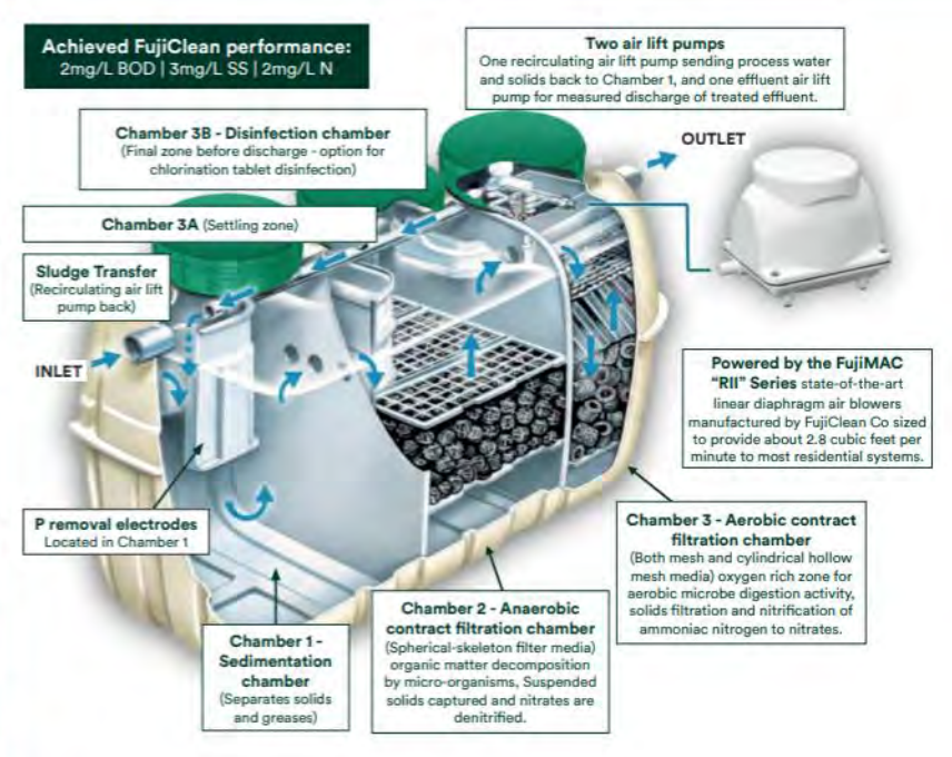
We collaborate with our supply chain to innovate. We have trialled natural coagulants for phosphorus removal, we are quantifying the GHG benefits of alternative treatment technologies like FujiClean and we are developing use cases for lower-carbon concrete such as LowCast.
As we move into the next phase of our net zero journey, our ambition remains clear: achieving net zero by 2050. Our starting point is to reduce emissions from what we can control. We recognise that those from the biological treatment of wastewater cannot be fully eliminated so we are collaborating with others in the water sector to develop and promote more sustainable methods.
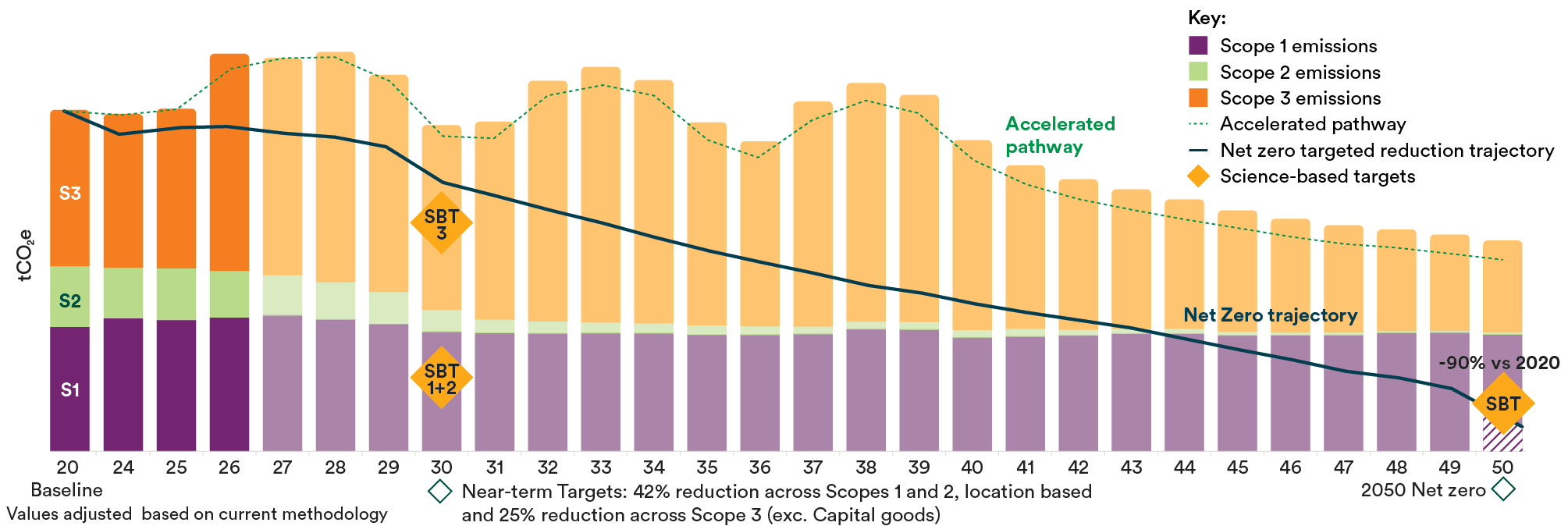
We expect continued growth in the services we provide to a rising population, alongside the need to adapt our assets for climate change and meet evolving legal and regulatory requirements to protect the water environment. The figure below illustrates both our current pathway and an accelerated version of our plans. While the pathway to net zero is not yet fully defined, and there is no universal roadmap for a business of our scale and complexity, we recognise the challenge and are actively developing the technologies, partnerships and operational changes needed to close the gap.
To offset some of the residual emissions, we have programmes in place to remove and store carbon through peatland restoration and woodland creation. In the longer term, we may opt to purchase carbon credits to further offset residual emissions and achieve net zero.
